 English

Views: 0 Author: Site Editor Publish Time: 2026-11-18 Origin: Site
Most pool owners top off chlorine, skim leaves, and check the pH without ever thinking about what's happening inside the filter tank. Yet that buried layer of sand is doing the real work of keeping your water clear, and like any filtration media, it wears out. Ignore it long enough, and you'll notice cloudy water, slower flow, and a pump working harder than it should.
This guide breaks down how often you should actually change the sand in your swimming pool sand filter, what signs tell you it's time, and what happens if you wait too long.
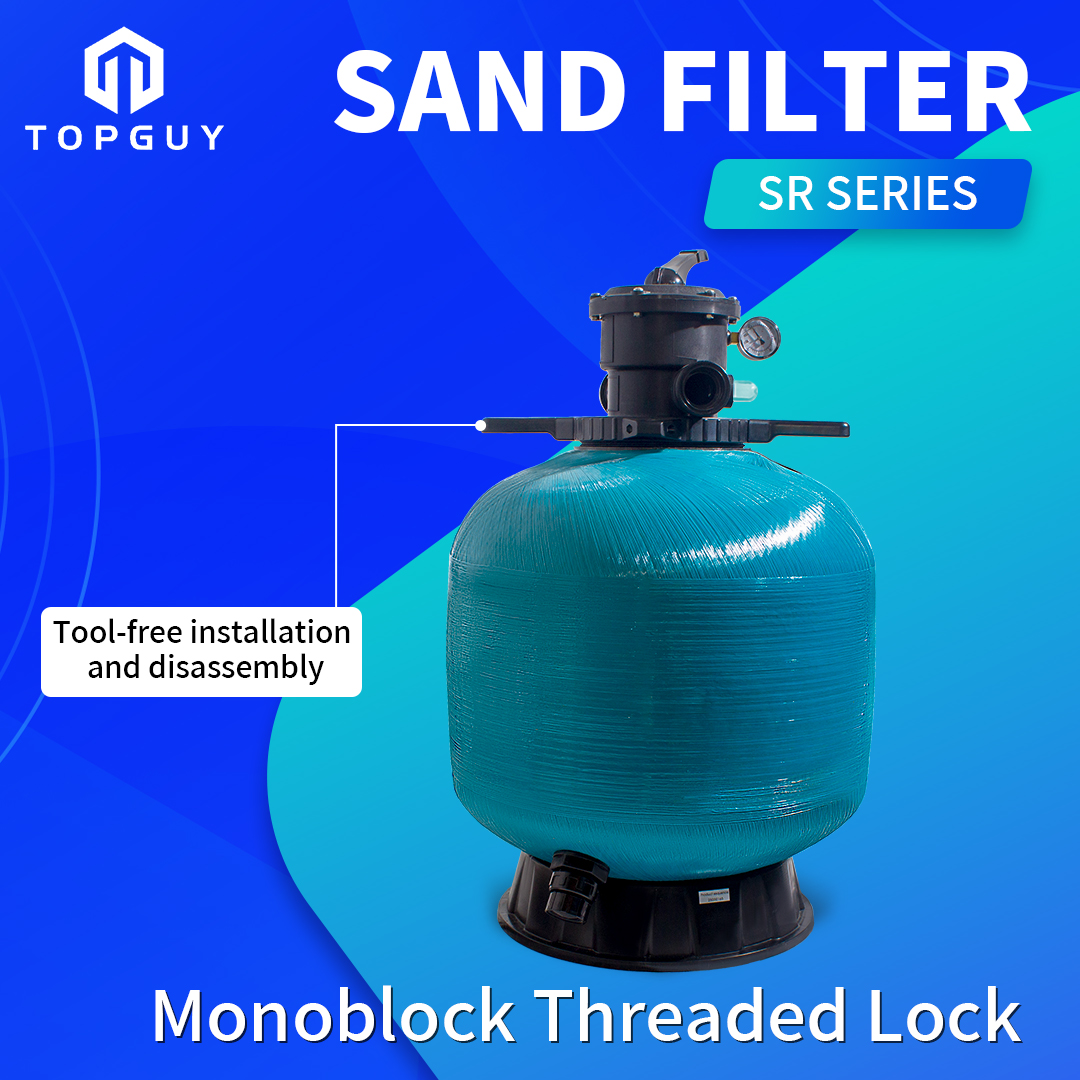

Sand filters work by trapping dirt, oils, and small particles as pool water passes through a bed of specially graded silica sand. Over months of use, those particles don't fully rinse away during backwashing. Instead, they coat the individual grains of sand, a process often called "channeling," where water starts finding the path of least resistance through cracks in the media rather than filtering evenly across the whole bed.
Once channeling sets in, the filter looks like it's running fine, but it's really just passing water through narrow gaps while leaving the rest of the sand bed clogged and useless. This is why pressure gauges and water clarity—not just the calendar—are the most reliable indicators that something needs attention.
Most manufacturers and pool professionals recommend replacing the sand every 3 to 5 years for residential pools under normal use. Commercial pools, which see far more bathers and higher filtration demand, often need a sand change every 1 to 3 years.
That said, this is a general guideline, not a fixed rule. Sand doesn't "wear out" in the way a cartridge filter does. It can still work after 5 years if it's been backwashed properly and the water chemistry has stayed balanced. On the other hand, poor maintenance can shorten that lifespan significantly.
Pool Type | Typical Sand Replacement Interval | Key Maintenance Factor |
|---|---|---|
Residential (in-ground) | 3–5 years | Regular backwashing |
Residential (above-ground) | 3–5 years | Consistent water balance |
Commercial / public pools | 1–3 years | High bather load |
Pools with hard water | 2–4 years | Calcium buildup on sand grains |
Pools in high-pollen or dusty areas | 2–3 years | Frequent fine debris |
Rather than guessing based on age alone, watch for these physical signs that your filter media has reached the end of its useful life:
Rising pressure gauge readings. A consistent increase in pressure, even right after backwashing, usually points to compacted or clogged sand.
Cloudy water that won't clear. If chemical levels are balanced and the pool still looks hazy, the filter may no longer be catching fine particles effectively.
Sand in the pool. Finding grains of sand near the return jets is a clear sign the media has broken down or the internal laterals have failed.
Longer filtration cycles. If you're running the pump longer than usual just to maintain clarity, the sand bed is likely underperforming.
A musty or earthy smell from the water. This often indicates organic buildup trapped deep in the media that backwashing can no longer remove.
Delaying a sand change doesn't just affect water clarity. Clogged or channeled sand forces the pump to work harder to maintain flow, which increases energy consumption and accelerates wear on pump seals and motors. In more serious cases, compacted sand can crack the internal distribution laterals, leading to a far more expensive repair than a straightforward sand replacement would have been.
Balancing water chemistry becomes harder too. Chlorine and other sanitizers can't do their job properly if the filter isn't removing organic material and fine debris as intended, leading to a cycle of chemical overuse without actually solving the underlying clarity problem.
Not all filter sand is created equal. Standard swimming pool filter sand is graded to a specific particle size (usually #20 silica sand), which is finer than typical construction sand and designed to trap particles as small as 20–40 microns. Using the wrong grade can reduce filtration efficiency or cause sand to wash back into the pool.
If your filter tank, laterals, or valve assembly show signs of wear alongside old sand, it's often worth evaluating the whole filtration system rather than just refilling the tank. Companies with decades of manufacturing experience, like Jiangmen Topguy Electromechanical Equipment Co., Ltd., design filtration equipment—including a sand filter for pool use ranging from residential backyards to commercial facilities—built with gelcoat and fiberglass tanks engineered to resist corrosion and pressure fatigue over years of operation. With more than 30 years in the water treatment industry and an in-house factory handling design through assembly, Topguy has built a reputation among pool equipment buyers for durable, competitively priced filtration systems.
For pool builders, distributors, or facility managers sourcing equipment at scale, working with established sand filter suppliers matters just as much as choosing the right sand. Reliable suppliers back their products with consistent quality control and certification, such as CCC and CE compliance, giving buyers confidence that the tanks, valves, and internal components will hold up over repeated seasonal use.
A simple way to stay ahead of sand replacement is to log your filter pressure readings monthly and note any gradual increases over time. Pairing this habit with a seasonal inspection—checking for sand in the pool, unusual pump sounds, or slow-clearing water—will tell you far more than relying on a fixed replacement date alone.
Swimming pool maintenance often comes down to small, consistent checks rather than reactive fixes. Keeping an eye on your filter media, understanding typical replacement timelines, and sourcing quality equipment when it's time for an upgrade will keep your water clear and your system running efficiently for years to come.
