 English
Views: 0 Author: Site Editor Publish Time: 2026-04-08 Origin: Site
Maintaining pristine swimming water requires dedicated equipment functioning in perfect harmony. Many new owners often wonder about the specific mechanics governing their backyard oasis. A frequent point of confusion surrounds the exact terminology used for circulation equipment. We aim to explore the core topic: examining whether a pool pump alongside a filtration unit serve the exact same purpose. To provide absolute clarity, they perform entirely different but highly complementary roles. Your pool pump acts as the heart of the operation, while the filtration unit serves as the kidneys. When you evaluate your pool pump and filter, you will notice they connect together to form a seamless cleaning loop. This comprehensive guide will politely walk you through the precise functions of each component, detailing how a Sand Pool Filter operates within a broader pool filter system to keep your water sparkling clean.

To address the primary subject immediately, a pool pump is not the same thing as a filtration unit. They are two distinct machines bolted together on your equipment pad. Understanding how your pool pump and filter interact provides the foundation for proper maintenance. The pump draws water from the skimmers, pushing it forcefully through the plumbing. Conversely, the filtration component receives this fast-moving water, trapping microscopic debris before returning clean water to the swimming area.
When you purchase a complete pool filter system, it typically includes both the motor unit alongside the cleaning tank. Evaluating your pool pump and filter regularly ensures optimal performance during peak swimming seasons. We highly recommend familiarizing yourself with these individual pieces. A malfunctioning motor will halt water movement completely, whereas a clogged purification tank simply slows the flow. Recognizing the distinct nature of your pool pump and filter allows you to diagnose minor issues before they require professional intervention.

The circulation motor serves as the driving force behind your entire pool filter system. It utilizes an electrical motor spinning an impeller to create a powerful vacuum. This vacuum pulls water from the main drains into the front housing. You will normally find a small strainer basket located at the front of this motor unit. This basket catches large debris, protecting the delicate internal impeller from damage.
We kindly ask owners to clean this basket weekly. If this initial basket becomes overwhelmed with leaves, the motor must work significantly harder, which degrades the overall pool filter system efficiency. The power of this motor dictates how many gallons of water turn over daily. Selecting the correct horsepower ensures your pool pump and filter operate without excessive electrical strain. Always match your motor size to the capacity of your swimming facility.
After the motor pushes the water out, the liquid immediately enters the purification tank. This tank represents the second half of your pool pump and filter partnership. Without this critical tank, the motor would merely circulate dirty water continuously. The tank contains specialized media designed to trap dirt, oils, cosmetics, alongside environmental contaminants.
Various types of purification tanks exist on the market today. Cartridge units utilize pleated paper elements, whereas Diatomaceous Earth units use crushed fossil powders. However, the most universally recognized option remains the Sand Pool Filter. Regardless of the specific type, integrating a high-quality tank into your pool filter system guarantees exceptional water clarity. Let us dive deeper into the most popular option available to homeowners today.

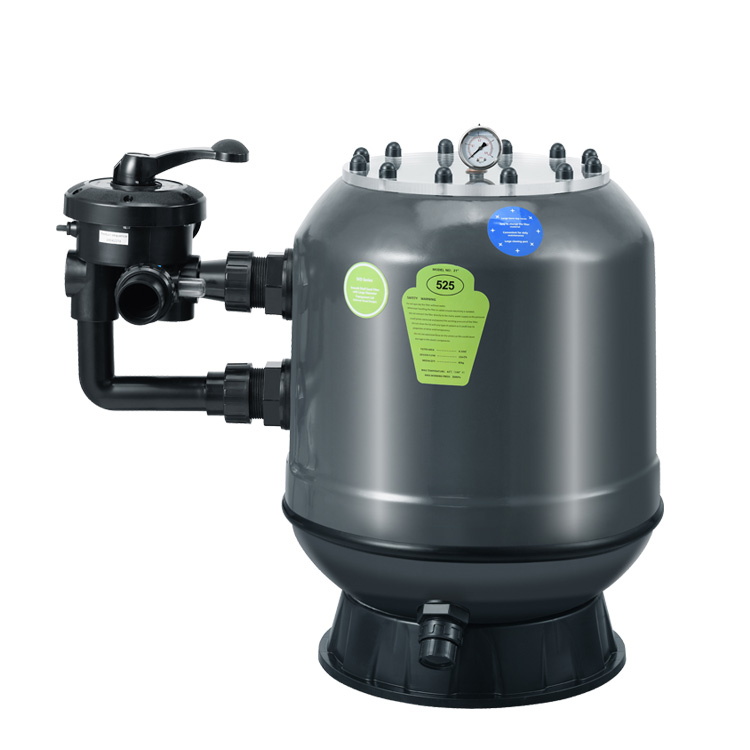
A Sand Pool Filter stands as the most robust option for residential water maintenance. This specific tank utilizes specially graded silica to capture microscopic impurities. As the motor forces water into the top of the Sand Pool Filter, the liquid pushes downward through the silica bed. The sharp edges of the silica particles grab onto dirt, allowing only purified water to pass through the lower laterals.
The simplicity of a Sand Pool Filter makes it incredibly popular. The water enters through a multiport valve, directing the flow downwards. Over time, the silica bed inside the Sand Pool Filter becomes saturated with captured debris. When this occurs, the pressure reading on the tank will rise significantly. A rising pressure gauge serves as a polite reminder to perform basic maintenance on your pool filter system. The beauty of a Sand Pool Filter is that it requires no manual disassembly for routine cleaning.
To clean a Sand Pool Filter, you simply initiate a backwash cycle. By turning the multiport valve to the backwash setting, you reverse the water flow. The water enters the bottom of the Sand Pool Filter, lifting the silica bed upwards, flushing the trapped dirt out through a designated waste line. We recommend backwashing your Sand Pool Filter whenever the pressure gauge indicates an increase of ten pounds per square inch above the clean starting pressure. Regularly maintaining your Sand Pool Filter extends the lifespan of the entire pool filter system.
An optimized pool filter system perfectly balances motor power with tank capacity. If the motor is too powerful for the purification tank, it will force dirt straight through the media, returning cloudy water to the swimming area. Conversely, an undersized motor will fail to push water through the pool filter system effectively.
When configuring your pool pump and filter, consider upgrading to a variable speed motor. Variable speed motors adjust their revolutions per minute, allowing your pool filter system to run continuously at lower, energy-saving speeds. A continuous low-speed flow greatly enhances the trapping ability of a Sand Pool Filter. The slower the water moves through the silica bed, the more microscopic particles the Sand Pool Filter can successfully capture. A perfectly calibrated pool pump and filter will keep your backyard oasis perfectly clear with minimal chemical intervention.

Please review the following table to better understand the distinct components within your setup.
Equipment Component | Primary Function | Maintenance Requirement | Lifespan Expectancy |
|---|---|---|---|
Circulation Motor | Moves water from the pool to the equipment pad | Empty strainer basket weekly | Five to eight years |
Purification Tank | Traps microscopic dirt particles | Clean when pressure rises | Ten to fifteen years |
Sand Pool Filter | Uses silica media for debris removal | Backwash upon pressure increase | Media replacement every five years |
Pool Filter System | Combined setup of all circulation equipment | Comprehensive monthly inspection | Varies by individual parts |
We understand that water maintenance equipment introduces complex terminology. Below, we provide polite clarification regarding common operational queries.
To reiterate the core topic: a motor unit is absolutely not the same thing as a purification tank. The motor creates the required water velocity. The tank performs the actual debris removal. Together, they form your comprehensive pool filter system. You cannot operate a swimming facility successfully with only one of these components. Your pool pump and filter rely completely upon one another.
Extending the life of your pool pump and filter requires diligent observation. Ensure the water level in your swimming area never drops below the skimmer mouth. If the motor draws in air, it will overheat quickly, potentially destroying your entire pool filter system. Additionally, please remember to change the media inside your Sand Pool Filter every three to five years. Old silica becomes smooth over time, losing its ability to capture fine dirt particles. Keeping the media fresh ensures your Sand Pool Filter operates at peak efficiency.
If you notice your pool pump and filter constantly struggling to maintain clarity, an upgrade might be necessary. Sizing a new pool filter system requires calculating your total water volume. We strongly advise consulting with equipment specialists when selecting a new Sand Pool Filter or variable speed motor. Proper sizing prevents premature wear on your brand new pool pump and filter.
We hope this comprehensive guide has successfully clarified the distinct differences between circulation motors versus purification tanks. Recognizing that your pool pump and filter serve unique, complementary roles empowers you to become a better caretaker of your backyard investment. By understanding the mechanics of a Sand Pool Filter, you can maintain excellent water quality throughout the warmest months of the year. Always remember that a cohesive pool filter system relies on harmony between the water mover alongside the debris trapper.
When the time arrives to upgrade your backyard setup, we respectfully suggest exploring the exceptional catalog offered by topguy pool. Their dedication to manufacturing durable, high-efficiency equipment ensures your swimming facility remains pristine with minimal effort. Whether you require a replacement motor or a high-capacity Sand Pool Filter, topguy pool delivers outstanding reliability.
Email: sales04@topguypool.com
Phone: +8618026875212
