 English

Views: 0 Author: Site Editor Publish Time: 2026-11-24 Origin: Site
A facility manager inherits a pool, not a filtration philosophy. Yet every decision about tank size, media depth, and backwash cycles traces back to one question rarely asked out loud: how many bodies move through this water on a given day? Get that number wrong, and no amount of chemical treatment fixes the cloudiness that follows.
Residential pool owners rarely think this way, and they don't need to. Their pools serve a handful of swimmers on scattered afternoons. Commercial facilities—municipal pools, hotel resorts, fitness clubs—operate under an entirely different load profile, and the equipment has to match it. Treating a commercial pool filter as simply a larger residential unit is where most filtration headaches begin.
This article takes a different angle on commercial filtration than the usual spec sheet rundown. Instead of leading with tank dimensions, we'll start with the regulatory and usage pressures that shape swimming pool filter setup, then work through what separates a dependable commercial sand filter from one that will leave a facility manager fielding complaints by midsummer.
Every commercial pool operates on borrowed time, in a sense. Public health codes typically require the entire pool volume to cycle through filtration every four to six hours. Compare that to residential standards, which often allow eight hours or more, and the gap becomes obvious. A commercial pool filter has roughly half the time to do the same job, for a far larger crowd.
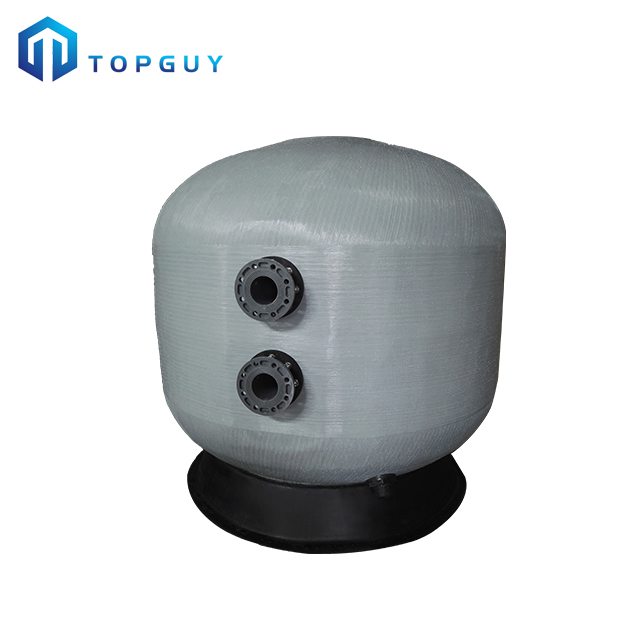
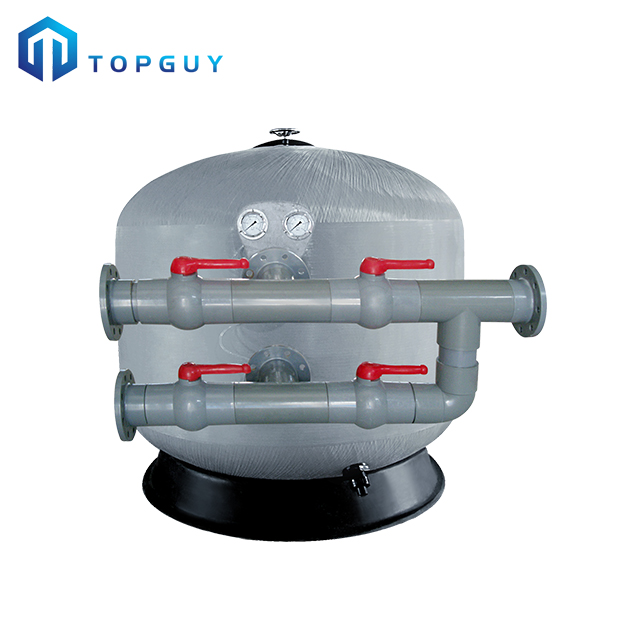
That compressed turnover window forces three structural changes: higher flow capacity, wider tank diameters, and internal components engineered for near-continuous cycling rather than occasional weekend use. None of these are optional upgrades. They're the baseline requirements for passing inspection and keeping water genuinely safe.
Bather load compounds the pressure. A backyard pool might host a dozen swimmers on its busiest day. A hotel pool or water park can see that many people in the water simultaneously, every day, for an entire season. Each swimmer contributes oils, sunscreen residue, and skin cells that the filter has to trap. Without sufficient capacity, media clogs faster, pressure climbs sooner, and water clarity declines well before anyone expected a problem.
Sustained pressure cycling is unforgiving on cheaply built tanks. Commercial-grade filtration housing is typically constructed from thicker fiberglass-reinforced plastic or coated steel specifically to withstand that repeated stress without cracking or corroding.
This is where manufacturing depth starts to matter more than marketing claims. Jiangmen Topguy Electromechanical Equipment Co., Ltd. builds its filtration equipment around this durability requirement, drawing on more than 30 years of experience producing water treatment systems for domestic and international markets. A company that has spent three decades refining tank construction for high-cycle environments tends to anticipate failure points that a newer manufacturer hasn't yet encountered.
Reconfiguring a mechanical room after installation is expensive and disruptive. A sound swimming pool filter setup avoids that outcome by addressing four questions before equipment ever arrives on site.
What flow rate does this facility actually need? Start with total pool volume, then divide it by the turnover time your local code requires. The result is the minimum gallons-per-minute (GPM) your pump and filter combination must sustain. Undersizing this number is one of the most common—and costly—mistakes facility managers make, usually discovered only after cloudy water complaints start rolling in.
Does the pump match the filter? A filter performs only as well as the pump feeding it. Horsepower, impeller design, and motor type all need to align with the filter's rated flow capacity. Mismatched pairings lead to either weak filtration or excessive mechanical strain, and both shorten the system's working life.
Is there a real plan for backwash and drainage? Commercial filters cycle through backwash far more often than residential units do. That means facilities need plumbing and drainage capacity sized for frequent flushing, without interrupting pool access for guests or members.
Is there room to maintain the equipment? Commercial filtration hardware is larger and heavier than residential models. Mechanical rooms need clearance for installation, routine servicing, and media replacement, which for sand-based systems typically happens every three to five years.
Most facility managers choose from a handful of established options. Here's how they generally stack up for commercial applications.
Filter Type | Typical Flow Capacity | Maintenance Frequency | Best Suited For |
|---|---|---|---|
Top-Mount Sand Filter | Moderate to high | Backwash every 1–4 weeks | Mid-sized commercial pools with standard bather loads |
Side-Mount Sand Filter | High | Backwash every 1–4 weeks | Facilities needing easier valve access and servicing |
Gelcoat Fiberglass Filter | High | Backwash every 1–4 weeks | High-traffic pools requiring corrosion-resistant tanks |
Stainless Steel Sand Filter | Very high | Backwash every 1–4 weeks | Heavy-use commercial and industrial facilities |
Sand remains the dominant filtration media in commercial installations, and for good reason: it balances cost, filtration quality, and ease of maintenance better than most alternatives. A properly maintained sand bed captures particles down to 20–40 microns, which satisfies most public health standards when paired with appropriate chemical treatment.
Flow rate gets most of the attention when facilities shop for a commercial sand filter, but a few other specifications determine whether that filter survives years of daily use or fails within its first season.
Tank material and thickness dictate how well the unit holds up under constant pressure cycling. Reinforced fiberglass and gel-coated tanks resist cracking far better than thinner, consumer-grade plastics that were never designed for commercial-scale demand.
Valve quality governs how smoothly the system shifts between filter, backwash, rinse, and waste modes. Multiport valves built from durable materials reduce leak risk at a component that gets used daily—sometimes multiple times a day—in a commercial setting.
Internal laterals, the perforated components that spread water evenly through the sand bed, need design precision to prevent channeling. Poorly engineered laterals cause uneven filtration and shorten media life well before the expected three-to-five-year replacement window.
So which option fits a given facility? If the water chemistry runs corrosive, or the site sits in a coastal, humidity-heavy environment, a fiberglass or gelcoat tank handles that stress better than standard materials. If bather loads run exceptionally high and structural longevity matters more than upfront cost, a stainless steel sand filter is the stronger investment. For most mid-sized commercial pools, though, a well-built side-mount or top-mount sand filter delivers the best balance of performance and value without overspending on capacity the facility doesn't need.
Manufacturers that produce their own tanks, valves, and internal components in-house tend to deliver more consistency across these specifications than those relying on third-party suppliers. Topguy operates its own factory and mold department, giving the company direct control over material quality and design details across its sand filter and pump product lines rather than outsourcing the parts that matter most.
Even a well-chosen commercial pool filter underperforms without consistent upkeep. A disciplined maintenance routine typically includes:
Monitoring pressure gauges daily and backwashing once pressure rises 8–10 PSI above the clean, baseline reading
Inspecting valves and seals quarterly for early signs of wear or leaks
Replacing filter media every three to five years, adjusted for bather load and water chemistry
Logging turnover rates and chemical readings to catch gradual performance decline before it becomes a visible water quality issue
Facilities that pair solid equipment with this kind of routine consistently report fewer emergency repairs and lower long-term operating costs than those treating filtration as something to install once and ignore.
Commercial pool filtration isn't an area where shortcuts pay off. Strict health code requirements, heavy bather loads, and continuous daily operation all demand equal attention—to equipment selection, to swimming pool filter setup, and to the maintenance schedule that follows.
Facilities that commit to durable tank construction, properly matched pump-filter pairings, and routine upkeep tend to see the clearest water and the lowest total cost of ownership across the equipment's working life. Manufacturers with decades of hands-on production experience, like Jiangmen Topguy Electromechanical Equipment Co., Ltd., build that engineering depth directly into their filtration systems—a factor worth weighing carefully before any high-traffic commercial pool purchase.
How often should a commercial pool filter be backwashed?
Most sand-based commercial filters need backwashing every one to four weeks, though the exact interval depends on bather load, debris levels, and local water conditions. A pressure rise of 8–10 PSI above baseline is the clearer signal to act, regardless of the calendar.
What's the difference between a top-mount and side-mount sand filter?
Both use the same sand filtration principle, but side-mount filters offer easier access to internal valves and components for servicing, while top-mount units are often more compact. The right choice usually comes down to available mechanical room space and how frequently the facility expects to perform maintenance.
How long does commercial filter sand typically last?
Filter sand generally needs replacement every three to five years, though heavier bather loads or aggressive water chemistry can shorten that window. Logging turnover rates and pressure readings helps facilities catch declining performance before it shows up as cloudy water.
