 English
Views: 0 Author: Site Editor Publish Time: 2026-08-15 Origin: Site
A filter pump is a combined or paired pool system that circulates water through a filtration medium to remove debris, bacteria, and contaminants. Understanding how this equipment works—and how the pump and filter components relate to each other—helps pool owners choose the right setup and maintain cleaner water year-round.
Every pool owner eventually faces the same question: why does my water turn cloudy even when I add the right chemicals? Nine times out of ten, the answer comes back to the circulation and filtration system. Without proper water movement and mechanical filtration, even a well-balanced pool will turn green within days.
This guide explains what a filter pump actually is, breaks down how the pump and filter work together, and helps you understand the key differences between these two components so you can make smarter decisions for your pool.
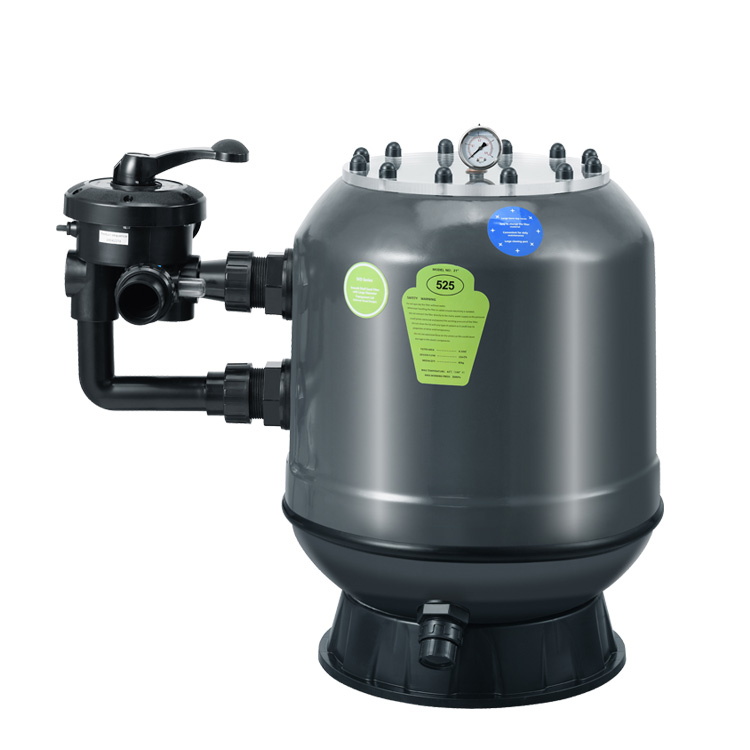
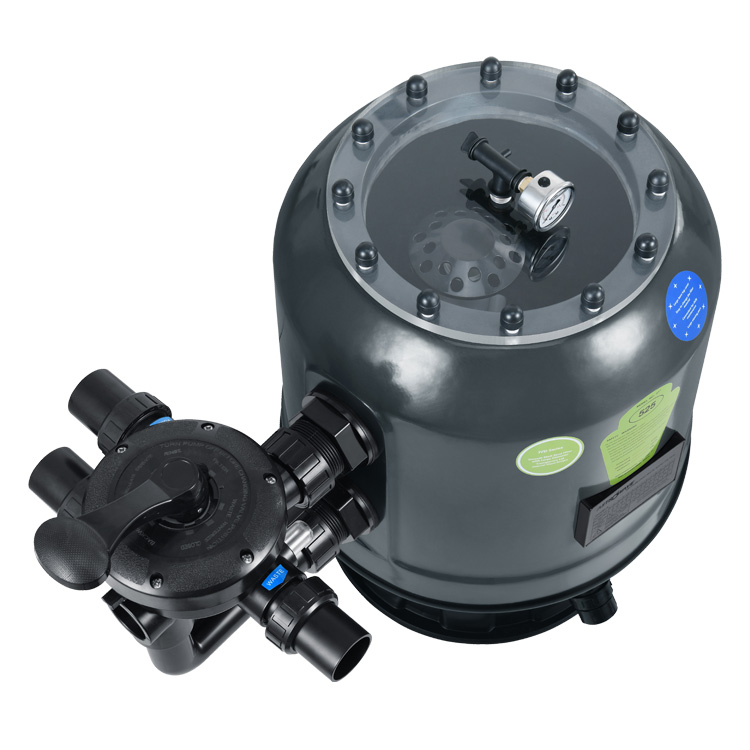
A filter pump is either a single integrated unit or a paired combination of two components: a motor-driven water pump and a filtration tank. The pump draws water from the pool through skimmers and drains, pushes it through the filter media, and returns clean water back into the pool via return jets.
Most residential setups use a sand filter as the filtration medium. Water enters the tank at the top, passes down through a bed of silica sand, and exits from the bottom. The sand traps particles as small as 20–40 microns—things invisible to the naked eye that still make water look dull or hazy.
The system runs on a cycle. Typically, a pool needs to turn its entire water volume over at least once every 8–12 hours. For a 50,000-liter residential pool, that means the pump must push a minimum flow rate capable of completing one full turnover within that window.
Many pool owners use "pump" and "filter" interchangeably, but they serve distinct functions. Confusing the two can lead to poor equipment choices and expensive maintenance issues.
Here's a side-by-side comparison:
Feature | Pool Pump | Pool Filter |
|---|---|---|
Primary function | Circulates water | Removes contaminants |
Key component | Motor and impeller | Sand, cartridge, or DE media |
Requires power | Yes | No (passive) |
Needs maintenance | Motor servicing, seal checks | Backwashing or cartridge cleaning |
Typical lifespan | 8–12 years | 10–20 years |
Failure sign | No water movement | Cloudy water, high pressure |
Replacement cost | Moderate to high | Low to moderate |
The pump is the active component—it creates flow. The filter is passive—it cleans the water that flows through it. Neither works properly without the other. A pump with no filter just circulates dirty water. A filter with no pump sits completely idle.
Understanding this distinction matters most when something goes wrong. If your water is cloudy but flow seems normal, the filter likely needs attention. If the pressure gauge reads low and jets feel weak, the pump is the place to start.
Undersized pumps struggle to complete a full water turnover within the recommended daily window. Oversized pumps push water through the filter too quickly, reducing contact time with the filtration media and allowing particles to slip through. Getting the sizing right is not optional—it's the foundation of a clean, healthy pool.
The relationship between the pool pump and filter goes beyond simple compatibility. Flow rate, tank diameter, media depth, and valve configuration all influence how effectively the system removes contaminants. A well-matched pair operating at the correct flow rate will consistently outperform an oversized or mismatched combination.
For residential pools, a single-speed or variable-speed pump paired with a top-mount or side-mount sand filter covers most standard applications. Commercial facilities require higher flow rates and greater structural durability, which is where industrial-grade equipment becomes necessary.
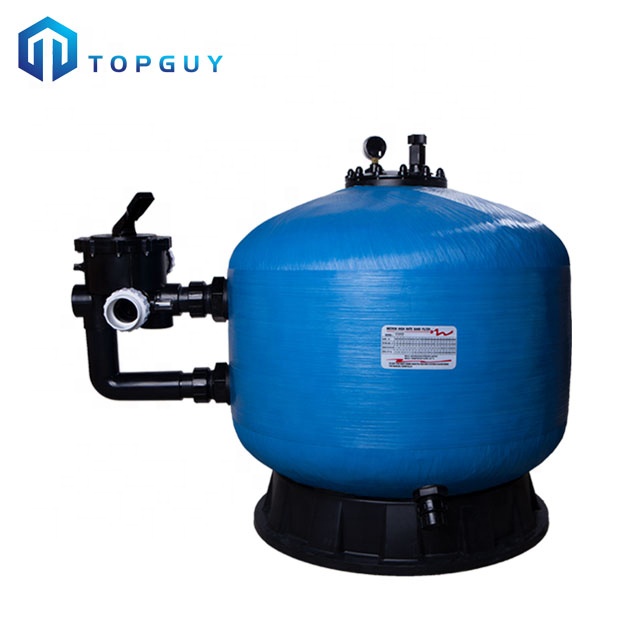
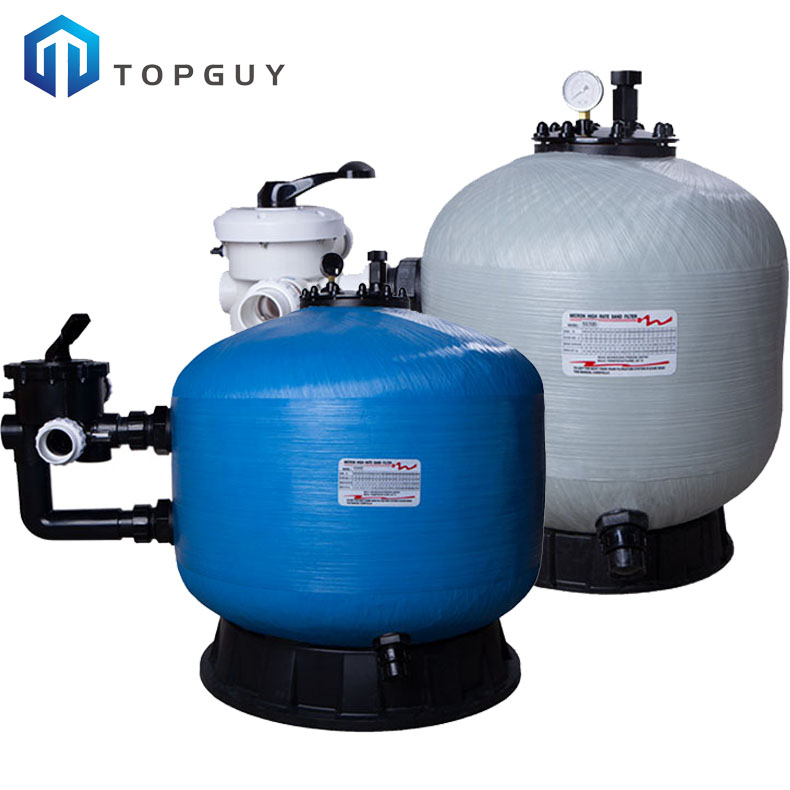
Jiangmen Topguy Electromechanical Equipment Co., Ltd. has specialized in swimming pool and spa equipment manufacturing for over 30 years. Topguy Pool designs and produces the full range of components needed to build a reliable filter pump system—from water pumps to sand filters to complete filter system packages—all manufactured in-house at the company's factory in Jiangmen City, Guangdong, China.
The product line includes AKP plastic pumps, BP copper pumps, variable-speed EAKP inverter pumps, and a full sand filter range covering top-mount, side-mount, gelcoat, HDPE, stainless steel, and commercial configurations. All products carry CCC Certification from China, with select models also CE certified.
Topguy Pool supplies both residential and commercial customers globally. Because design, tooling, and assembly all happen within the same facility, the company maintains tight quality control while keeping prices competitive. For buyers comparing pool pump vs filter options across different configurations, Topguy Pool's engineering team provides direct technical support to help specify the right equipment for each application.
Even the best equipment degrades without regular maintenance. Here's what a consistent maintenance routine looks like:
Backwash the sand filter every 4–6 weeks, or when the pressure gauge reads 8–10 PSI above its normal baseline. This reverses water flow through the tank to flush trapped debris out through the waste port.
Clean the pump strainer basket weekly during peak swimming season. A clogged basket restricts flow and forces the motor to work harder, shortening its lifespan.
Inspect O-rings and seals at the start of each season. Cracked or worn seals allow air into the system, reducing pump efficiency and causing noise.
Check the pressure gauge regularly. A reading that's consistently high points to a clogged filter. A reading that's consistently low may indicate a suction-side blockage or pump issue.
Routine attention adds years to both the pump and filter. Neglect, by contrast, tends to compound—a blocked filter strains the pump motor, which then fails earlier than expected.
A filter pump refers specifically to a pump used in pool filtration systems, designed to circulate water through a filter medium. A regular water pump simply moves water from one place to another without any filtration component. Pool filter pumps are sized and rated specifically for continuous operation alongside sand or cartridge filter tanks.
Most residential pools require 8–12 hours of pump operation per day to complete at least one full water turnover. Pools in warmer climates, or pools used heavily, may benefit from longer daily run times. Variable-speed pumps help reduce energy costs during extended run cycles.
Signs that the pump needs replacing include loud grinding noises, visible leaks around the motor housing, or consistently low flow despite a clean strainer basket. Signs that the filter needs replacing include persistent cloudy water after backwashing, cracked tank housing, or a broken multiport valve that cannot be repaired.
Not necessarily. The pump's flow rate must match the filter's design flow rate. Pairing a high-flow pump with an undersized filter tank pushes water through too quickly, reducing filtration effectiveness. Always check the manufacturer's specifications for compatible flow rates before purchasing either component.
Yes. Topguy Pool offers complete filter system packages in addition to individual pumps and sand filters. The company supplies both residential and commercial configurations and provides direct technical support to help customers select the right equipment combination for their specific pool size and application.
