 English
Views: 0 Author: Site Editor Publish Time: 2026-08-07 Origin: Site
TL;DR:
A copper water pump offers superior corrosion resistance, strong heat conductivity, and long-term durability compared to plastic alternatives. For pool owners and facility managers choosing between pump types, copper-bodied and copper alloy models consistently deliver better performance in demanding conditions—making them a worthwhile investment for both residential and commercial applications.
Pool equipment decisions are rarely straightforward. Flow rate, motor power, material construction—each variable affects how well your system performs over years of continuous use. Among those variables, pump body material is one that often gets overlooked, yet it plays a significant role in reliability and service life.
Copper-bodied pumps have maintained strong demand in professional pool settings for good reason. The material's natural properties—thermal conductivity, antimicrobial resistance, and structural strength—translate directly into real-world performance gains. This guide breaks down what separates copper pumps from alternatives, how to choose the right model, and what Topguy Pool offers across its BP copper pump range.


The pump body is in constant contact with moving water, changing temperatures, and chemical exposure from pool sanitizers. Plastic handles light residential use adequately. Metal construction handles sustained, high-demand operation better. Copper sits at a specific performance tier because of several material properties working together.
Copper conducts heat roughly 25 times more effectively than stainless steel by volume, which helps dissipate motor-generated heat and prevents thermal buildup during extended run cycles. The material also carries natural antimicrobial properties—copper ions inhibit bacterial growth on contact surfaces, a meaningful benefit in pool water management. These characteristics make a copper water pump particularly well-suited to high-use environments where downtime is costly.
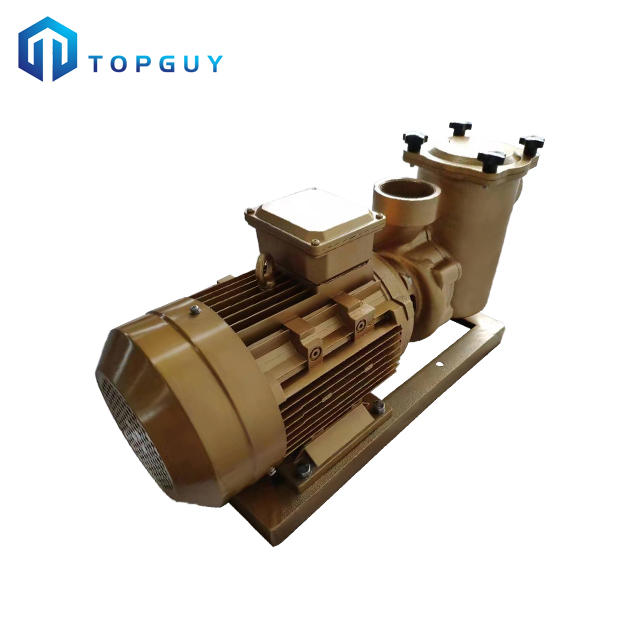

Pure copper is rarely used alone in pump construction. Manufacturers typically use copper alloys—primarily brass (copper-zinc) and bronze (copper-tin)—which offer improved tensile strength while retaining copper's corrosion-resistant characteristics. This matters when selecting equipment for pools with higher chlorine concentrations or mineral-heavy water supplies.
The table below summarizes how common pump body materials compare across key performance factors:
Material | Corrosion Resistance | Heat Conductivity | Durability | Best Use Case |
|---|---|---|---|---|
Plastic (ABS/PVC) | Moderate | Low | 3–5 years typical | Light residential use |
Stainless Steel | High | Moderate | 8–12 years | Commercial, marine |
Cast Iron | Low–Moderate | Moderate | 5–8 years | Budget commercial |
Copper / Copper Alloy | Very High | High | 10+ years | Heavy residential, commercial |
For pool operators managing facilities with year-round use—hotels, sports centers, community pools—copper alloy pumps offer the best balance between performance longevity and operating cost. Their resistance to scale buildup also reduces maintenance frequency, which lowers total cost of ownership over a 5–10 year horizon.
Choosing the right model comes down to three practical factors: horsepower rating, flow rate requirements, and installation type.
Horsepower and pool volume are the starting point. A standard residential pool of 40,000–60,000 liters typically requires a 1.5 HP to 2 HP motor for effective circulation. Pools exceeding 80,000 liters, or commercial facilities with multiple return jets and water features, generally require 3 HP or higher.
Flow rate determines how quickly all pool water passes through the filtration system. Most pool health guidelines recommend a full turnover every 6–8 hours. A pump rated at insufficient flow for the pool volume will leave water under-filtered even if the motor runs continuously.
Strainer basket capacity affects maintenance intervals. Higher-capacity strainers reduce how often the basket needs cleaning, which matters in pools surrounded by trees or in high-traffic use.
Topguy Pool's BP copper pump series addresses each of these variables directly. The copper pump models available through Topguy feature anti-corrosion construction, high-capacity strainer baskets, and energy-efficient motors across multiple horsepower configurations. Each unit is manufactured at Topguy's own facility in Jiangmen, China—giving buyers direct access to factory-quality pricing without distributor markups.
Topguy Pool has operated as a professional swimming pool and spa equipment manufacturer for over 30 years. The company's product line spans water pumps, sand filters, underwater lighting, and cleaning equipment—all produced in-house from a facility with CCC certification and CE certification on select product lines.
For buyers sourcing copper pump equipment at scale, this matters. Factory-direct supply means consistent quality control, faster lead times, and pricing that reflects actual production costs rather than retail margins. Topguy's BP copper pump series is among the brand's most established product lines, designed specifically for pool applications requiring corrosion-resistant, energy-efficient circulation.
The company also provides technical support and engineering guidance for customers working through equipment selection—a practical advantage when dealing with non-standard pool sizes or commercial flow rate requirements.
A copper water pump circulates pool water through the filtration system to remove debris, distribute chemicals evenly, and prevent stagnation. Copper-bodied pumps are preferred in commercial and high-use residential settings because of their resistance to corrosion and extended service life under continuous operation.
Yes. Copper alloys—particularly brass and bronze—are specifically resistant to chlorine-related corrosion. This makes them more durable than cast iron alternatives in heavily treated pool water. Standard pool chlorine concentrations do not degrade copper alloy components under normal operating conditions.
With proper maintenance, a quality copper or copper alloy pool pump lasts 10 years or more. Factors that affect lifespan include water chemistry balance, strainer basket cleaning frequency, and whether the pump is sized correctly for the pool volume. Undersized pumps running at continuous maximum load tend to wear faster.
Commercial pools typically require 3 HP or higher, depending on pool volume and the number of water return points. Hotels with multiple pool zones or attached spa facilities may require additional pump units for independent circulation circuits. Topguy Pool's product team can assist with sizing recommendations based on pool specifications.
Topguy Pool supplies copper pump products factory-direct through its website at topguypool.com. The BP copper pump series covers multiple horsepower configurations suited to both residential and commercial pool applications.
